HIGHTOP MACHINERY
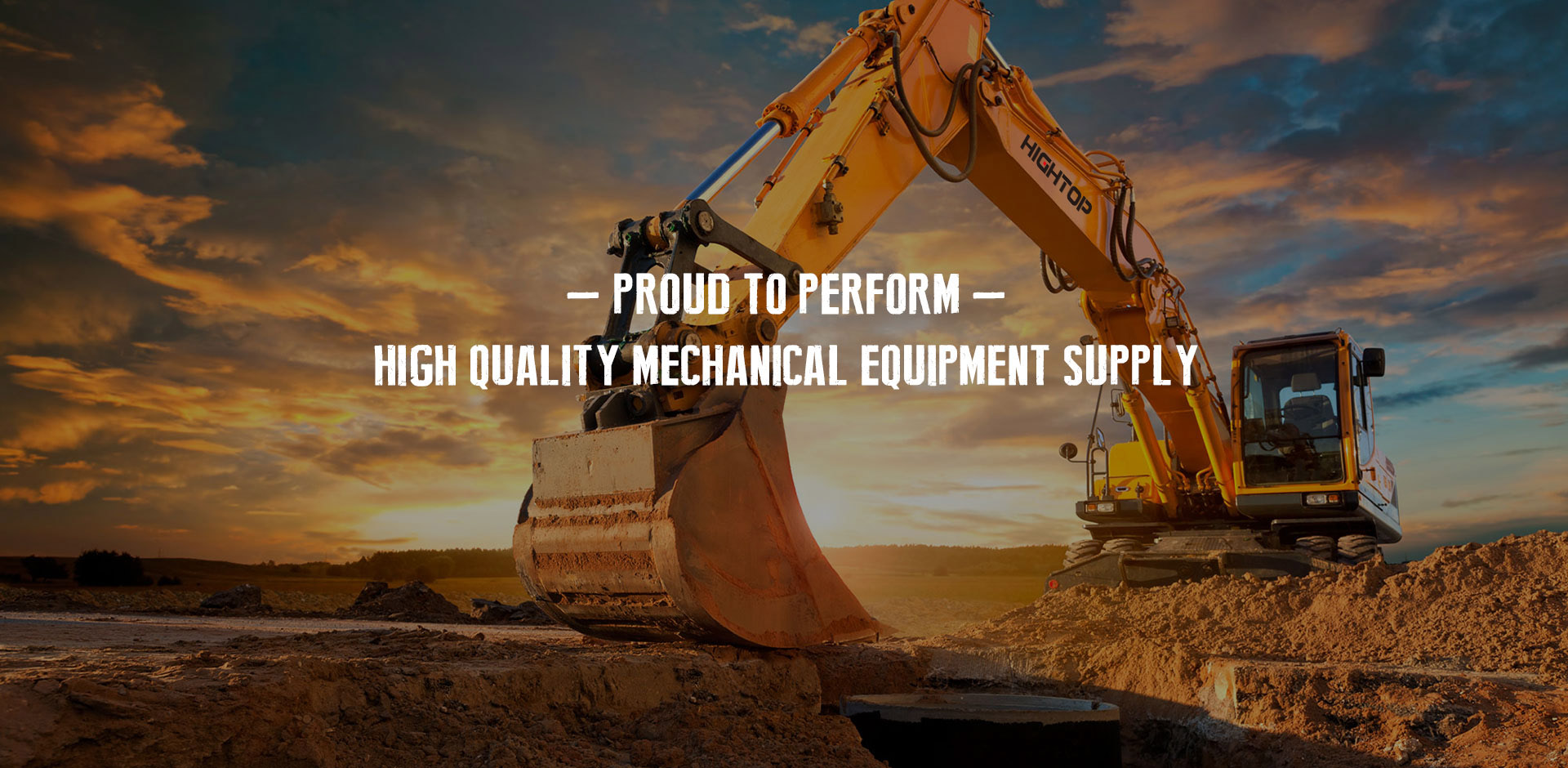
Mini excavators refer to hydraulic excavators with an operating weight of 1-6 tons, specifically designed for confined spaces and precision operations.
Their core capabilities can be summarized as “Three Specializations and Multiple Functions”: First, specialized for confined spaces with zero-tail or short-tail swing designs, making them ideal for narrow alleys in older neighborhoods, greenhouses, and similar environments. Second, professional precision control through hydraulic pilot control systems ensures fine-tuned operations and high accuracy. Third, specialized low energy consumption, with hourly fuel consumption only one-third that of traditional medium-sized excavators. Fourth, versatile attachment compatibility allows interchangeable hammers, grapples, and other tools to perform over ten tasks, reducing costs. Today, it has become essential for urban and rural infrastructure projects, handling tasks from rural homestead leveling to urban pipeline renovations.
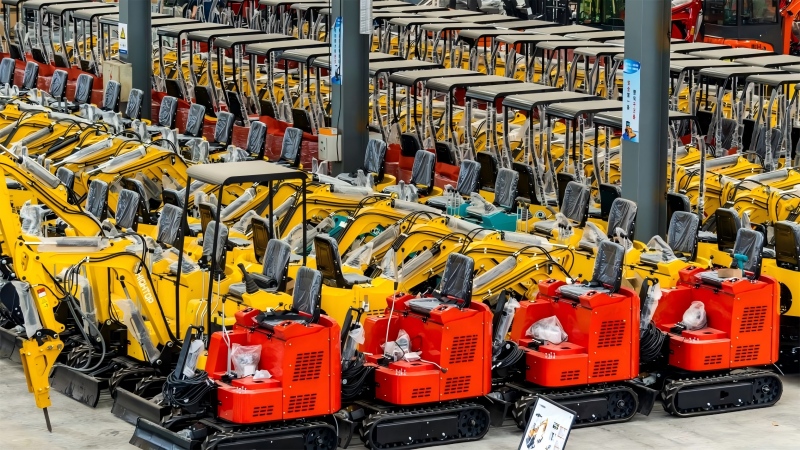
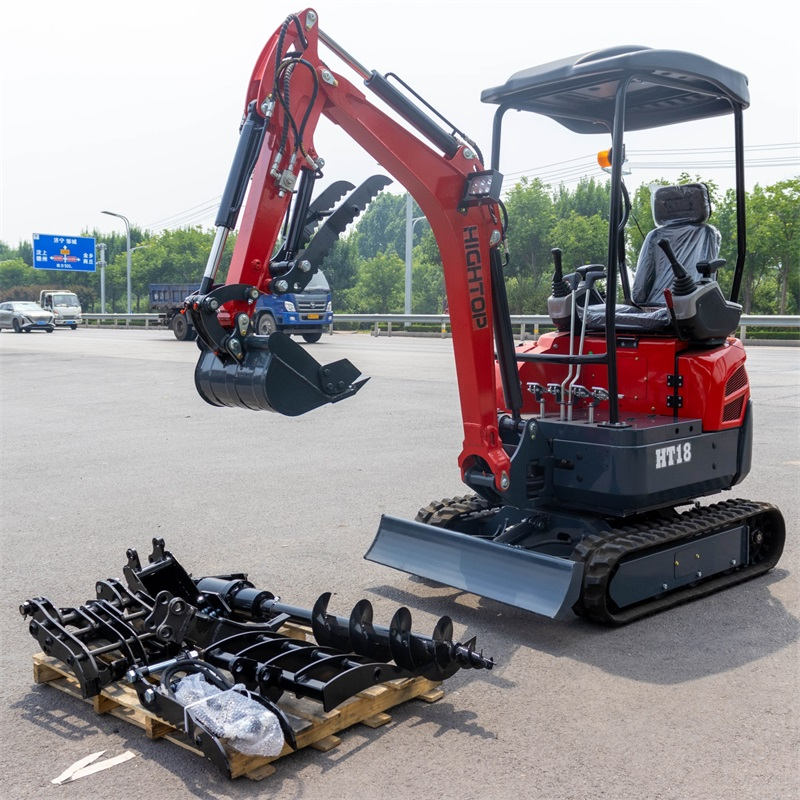
Digging depths vary significantly across different tonnage classes of compact excavators. The HT18 and HT20 target the 1.8-ton and 2-ton markets respectively, catering to diverse requirements.
The HT18 achieves a digging depth of 2.06 meters, with a digging height range of 0-2580mm and unloading height of 0-1637mm. This fully meets depth requirements for common projects like backyard renovations, greenhouse drainage ditch excavation, and small septic tank construction.
Beyond its fundamental digging capability, the HT18's core advantage lies in its “agility”: with an overall width of just 1100mm and a tail swing radius of only 790mm, it effortlessly navigates areas inaccessible to conventional equipment, such as beneath grape arbors or through narrow alleys. Powered by either a Kubota D722 or Kopel 192 engine with a rated output of 10.2 kW, it delivers stable performance with low fuel consumption. Equipped with boom swing functionality, it effortlessly digs in tight spots like corners and ditch edges, making it the “cost-effective choice” for small-scale urban and rural projects.
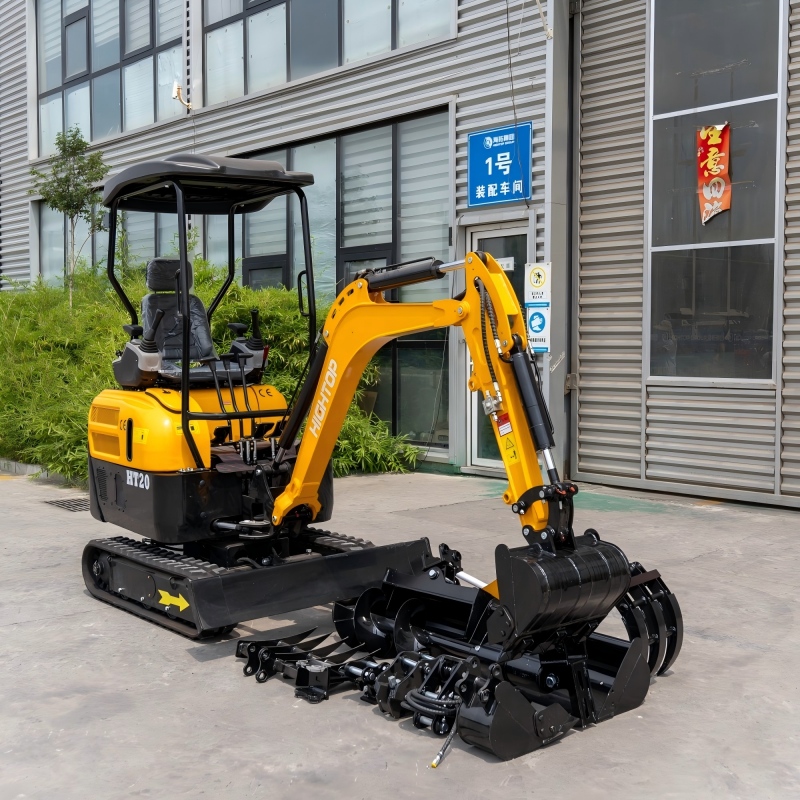
For deeper excavation needs, the 2-ton HT20 excavator extends digging depth to 2.45 meters, with a digging height of 3700mm, vertical digging depth of 2160mm, and extended digging radius of 4370mm. It excels in medium-depth tasks like municipal micro-pipeline laying, small fish pond excavation, and foundation trench digging.
This model's versatility manifests in three key dimensions: First, robust power from its Japanese Kubota engine delivers 14.1 kW rated power while meeting Euro 5/EPA emission standards, adapting to diverse domestic and international construction environments. Second, superior configuration features imported hydraulic pumps and valves for smooth, fluid operation, complemented by a zero-tail swing design for effortless maneuvering in confined spaces. Third, its attachment compatibility includes pre-installed breaker lines for rapid tool changes, enabling integrated digging, breaking, and drilling operations. This versatility effortlessly handles complex tasks like municipal emergency repairs and rural infrastructure projects.
It's important to note that digging depth isn't the sole criterion for selecting a compact excavator. Industry experts emphasize that core metrics like machine dimensions, boom swing radius, attachment adaptability, and fuel consumption also demand attention. For instance, indoor demolition requires a machine height below 2.3 meters, while mountainous terrain prioritizes track ground pressure and gradeability.
Experts advise considering body dimensions, boom swing radius, and attachment compatibility during selection. The HT18 offers “agility in a compact package,” while the HT20 delivers “stability and versatility,” covering mainstream 1-2 ton applications.